
Breaking Bread in Paris
Flash memoir

My first trip abroad was the summer after I graduated from law school. It had been a grueling three years, working part-time to support myself while poring over mountains of dense law books, anxiously awaiting the results of final exams, and commuting to a Boston suburb because my then-husband refused to live in the city. I survived the ordeal, but my marriage did not, so I moved in with my two best friends to finish my last year of formal education.
Finally came the last rite of passage, the dreaded bar exam. It was a make or break deal. Pass it, and you were officially an attorney. Fail, and your law degree was worthless while you suffered in ignominy to retake the exam. I had saved enough money to take the summer off to study with my friend Nancy. We promised to reward ourselves with a whirlwind tour of Europe as we anxiously awaited the results.
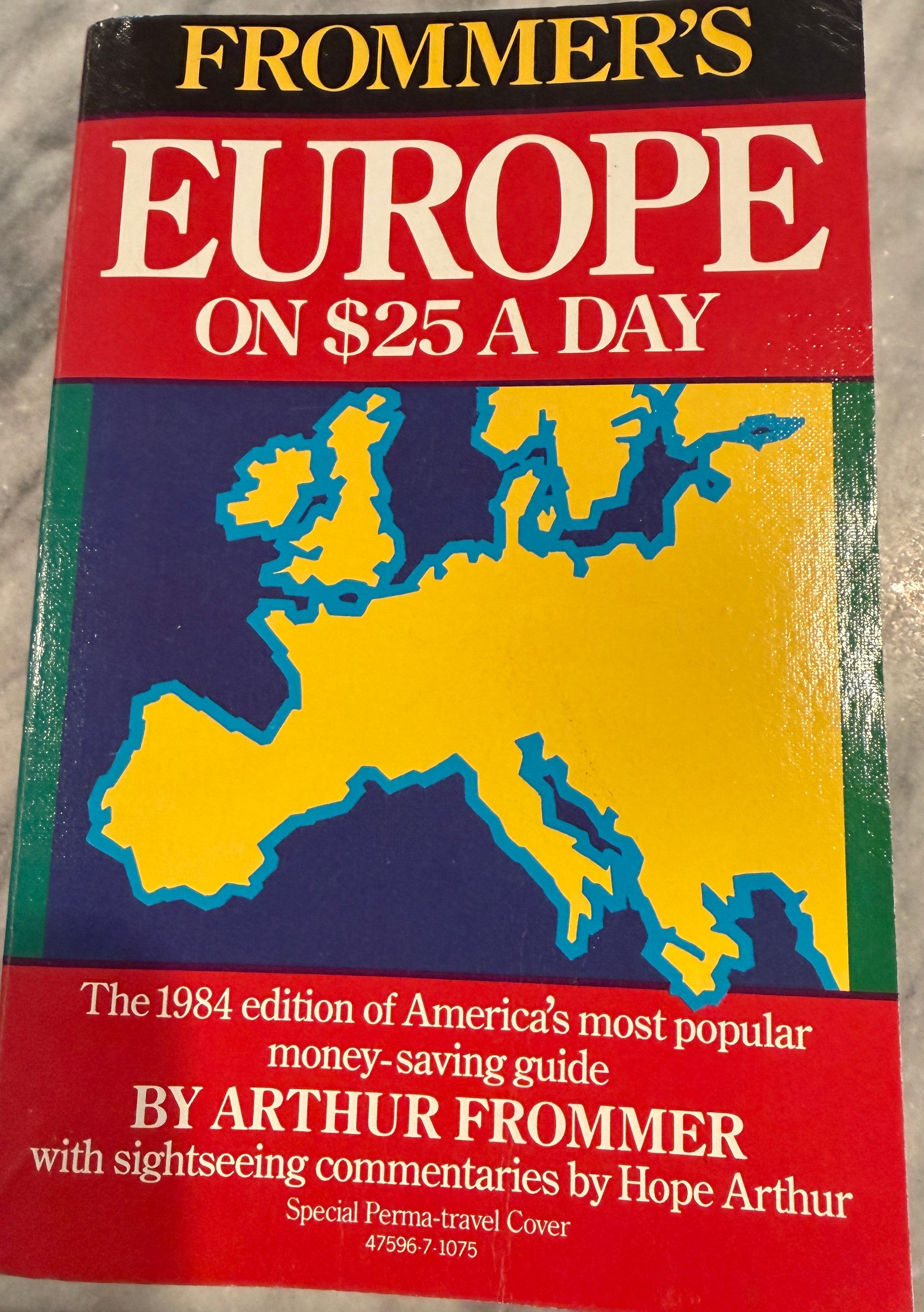
My guilty pleasure during study breaks was planning the trip and fantasizing about all the great adventures we would have. Armed with Frommer’s Europe on $25 a Day, I researched all the best budget bed & breakfast inns, local restaurants, and free sights in each of the cities we planned to visit. This was long before the days of cell phones and the internet, so I spent countless hours arranging Eurail passes, airfare, and trains; booking B&Bs; and poring over the best places to shop and dine.
Finally, the day arrived, and we were off to London. Our itinerary took us by ferry to Amsterdam, then by train through Switzerland, Germany, Italy, and France. There’s no such thing as bad food in Europe. Each morning began with a cup of deep, dark espresso, accompanied by freshly baked breads, hunks of creamy cheese, and fresh fruit from the B&B. At lunchtime, we would stop by a local bakery to pick up another baguette with some cold meats and cheese. We saved our splurge for dinners at sit-down restaurants.
Our last stop was Paris, City of Lights. Our room was the size of a rail compartment, with room for only a twin bed and a small dresser. But who cared? We were on the fabled Left Bank, where we roamed the streets past charming cafes, book stalls, and street vendors hawking everything from fresh fish to knock-off perfumes.
We saved our best dining experience for the last night in Paris. Frommer’s had touted a small café frequented by locals that served plentiful food family-style at long wooden tables. It was above our $25 a day budget, but wouldn’t break the bank.
Map in hand, we wandered the streets of the Left Bank looking for the address. Finally, we spotted a tiny street sign on the side of a building marking the location. It looked more like an alley than a street, dimly lit with cobbled stones and laundry hanging from iron balconies.
“Are you sure we’re in the right place?” Nancy asked as she surveyed the surroundings.
“Yes, it’s supposed to be one of the best bargains in Paris,” I replied with as much confidence as I could muster. “Look, there are some people going in now.”
Entering the doorway, we were led down a steep flight of stone steps worn by time and countless footsteps. At the bottom, we entered a long rectangular room, about the size of a university lecture hall. Rustic wooden tables with benches covered almost every square inch of the floor, overflowing with pitchers of red wine, baskets of bread, and enamel crocks equipped with tarnished silver ladles.
This was not the charming red checkered tablecloth restaurant of my imagination. It was at once more gritty, boisterous, and mundane than the Paris of my dreams. Groups of diners shouted across the room, greeting one another with bonhomie. Harried waiters scurried through the narrow aisles, refilling bowls and pitchers from enormous urns, red bowties drooping with sweat and humidity pouring from the small open kitchen in the back.
We stood in the doorway, unsure what to do, for what seemed like an eternity but was probably less than five minutes. Nancy whispered in my ear, “Do you want to leave and try somewhere else?” I had been pondering the same thought, doubting that my adventurous side was a match for this chaotic scene. Just then, one of the waiters noticed us and gestured impatiently. “Las bas,” he grunted, pointing to the only two empty seats in the middle of a table.
As we approached, the chatter died down as people eyed us with curiosity. “Americaines?” asked the man who appeared to be the head of a large family.
“Oui,” we replied in our best schoolgirl French.
“Beinvenue,” he replied, sliding over to make room for us. “Bon appetit!”
I knew from Frommer’s not to expect a menu, but wasn’t sure of the protocol for getting served. Within seconds, the same waiter who pointed out the table set down a pitcher of wine, a basket of freshly baked baguettes, and a small platter of cheese and charcuterie in front of us.
The chatter around us quickly resumed as we tore off pieces of the fragrant baguette, crusty on the outside with a soft, chewy interior and smeared them with cheese. First, a creamy Brie that nearly melted in your mouth, complemented by a pungent Camembert, and followed by the classic smelly Pont l’Eveque, washed down with a healthy sip of vin ordinaire.
Our obvious discomfort with the language was no match for the friendliness of the crowd. Soon, people were peppering us with questions in charmingly accented English. Where were we from, and what did we think of their fair city? They wanted to know our favorite sights, how long we were staying, and most of all, how did we find this hole in the wall restaurant. Looking around, we realized we were the only Americans eating here. Most of the patrons seemed to be regulars, shopkeepers, and families who knew one another and lived in the neighborhood. It was exactly the kind of experience I had been hoping for.
Before long, the waiter plunked down a ceramic pot in front of us, fragrant with the scent of savory oxtail and bone marrow cooked in bouillon with carrots, celery, leeks, onions, and turnips. We didn’t know it at the time, but we were eating one of France’s most iconic dishes, pot-au-feu.
Just when we thought we couldn’t eat another bite, the waiter returned with two generous slices of Gâteau au yaourt, a light, fluffy cake made with yogurt. We forced ourselves to take a bite, then couldn’t stop until we polished off the entire slice. Sated, we leaned back in our seats to finish our wine and bid our new friends au revoir.
There was no official check to pay. Everyone owed the same amount, so you simply handed it to the waiter as you left the restaurant. With an exchange rate of about seven French francs to the dollar, our 40 franc prix fixe meal came to $5.71 per person, just slightly above our $5 daily food budget. The experience was worth more than a 100 franc Michelin star restaurant to me. I’ve traveled far and wide since then, but it remains one of my favorite travel memories ever.